The short answer: Maybe. In a Manhattan co-op or condo, "washer/dryer allowed" doesn't always mean your apartment can add one. It depends on the building's current rules, board or management approval, where the machines can physically go, and NYC permit requirements. If in-unit laundry matters to you, find out before you sign the contract, not after closing.
If you're coming from a house, or from a newer building, in-unit laundry probably feels like a given.
In a lot of Manhattan co-ops and condos, it isn't. And the listing won't always tell you the whole story.
I'll walk you through what I'd check first. There's also a free checklist you can download along the way.
What should I check before I buy?
Eight things. Start with the building, then the apartment, then the money.
- Are new installations being approved? Ask management whether the board is approving new installations right now. Don't stop at "other apartments have them." Those machines may be grandfathered.
- What do the alteration rules say? Get the house rules and the alteration agreement. Look for language on washers, dryers, plumbing changes, waterproofing, contractor insurance, and building review fees.
- Where could the machines actually go? Have a contractor, architect, or licensed plumber look at the water supply, waste stack, drainage, and electrical. A closet that looks perfect on the floor plan may not work mechanically.
- Is there a wet-over-dry restriction? Many buildings won't allow a new water-using area above a neighbor's bedroom or living room.
- Is a ventless dryer required? A new exterior vent is often impractical or prohibited. Many buildings require a ventless condenser or heat-pump dryer.
- Can the electrical handle it? Older apartments may need an upgrade. Confirm the panel capacity and what your appliance requires.
- What permits and licensed trades are required? Depending on the scope, plumbing work may require a NYC Licensed Master Plumber and permits or filings through the New York City Department of Buildings. Electrical work may need a licensed electrical contractor. Bigger scopes can require an architect or engineer.
- What's the real cost? Budget for more than the machines. Plumbing, electrical, waterproofing, carpentry, professional fees, building review fees, deposits, permits, and finish work can change the total a lot.
Download the Manhattan Washer/Dryer Buyer Checklist (free PDF)
What is a wet-over-dry restriction?
It's a rule that limits new water-using areas above a neighbor's bedroom or living room.
Many buildings have some version of it. The concern is simple. If something leaks, the apartment below takes the hit. That's why laundry is usually easiest in or next to an existing kitchen or bathroom, where the plumbing is already there.
So the place you'd love to put the machines might not be the place the building will allow.
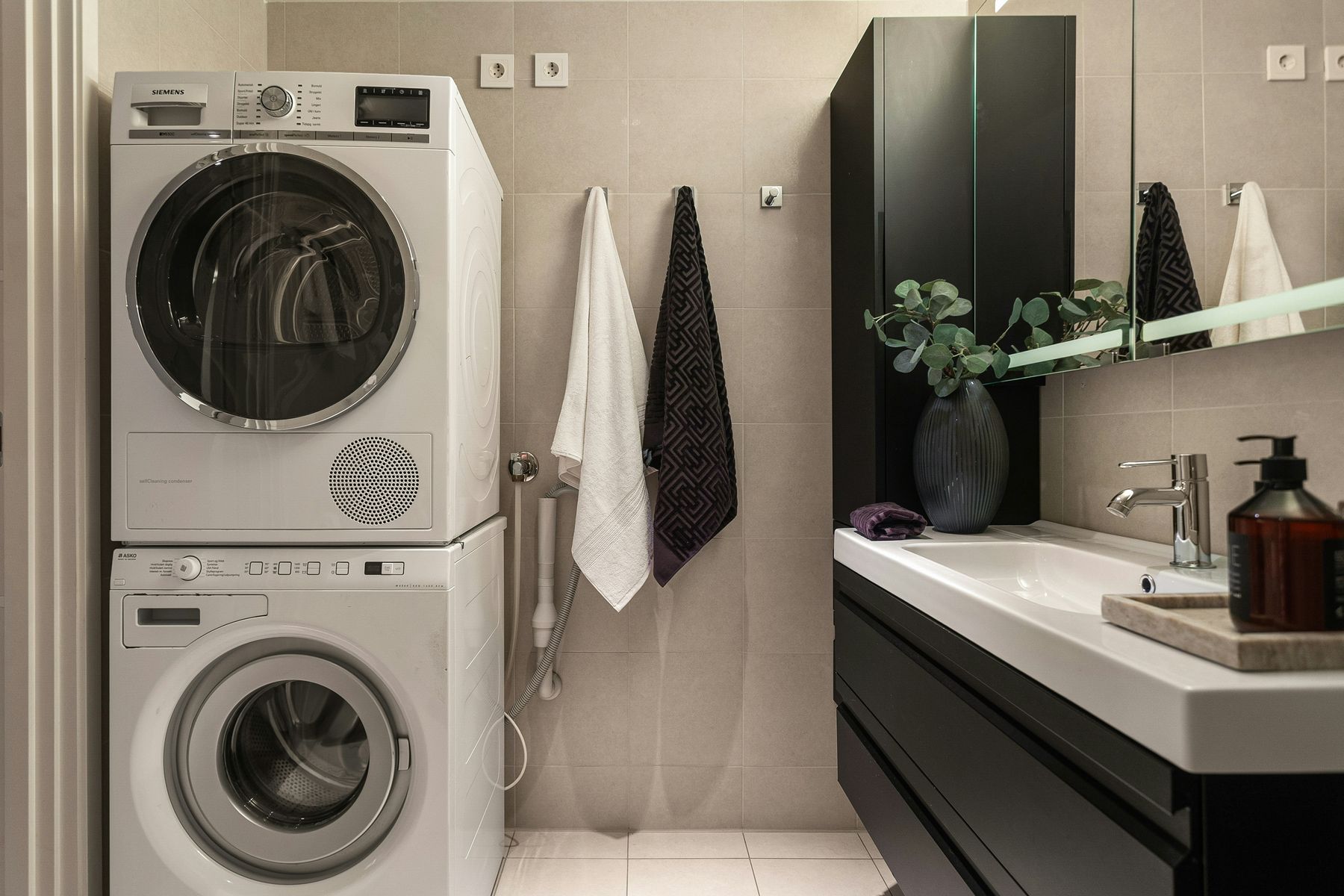
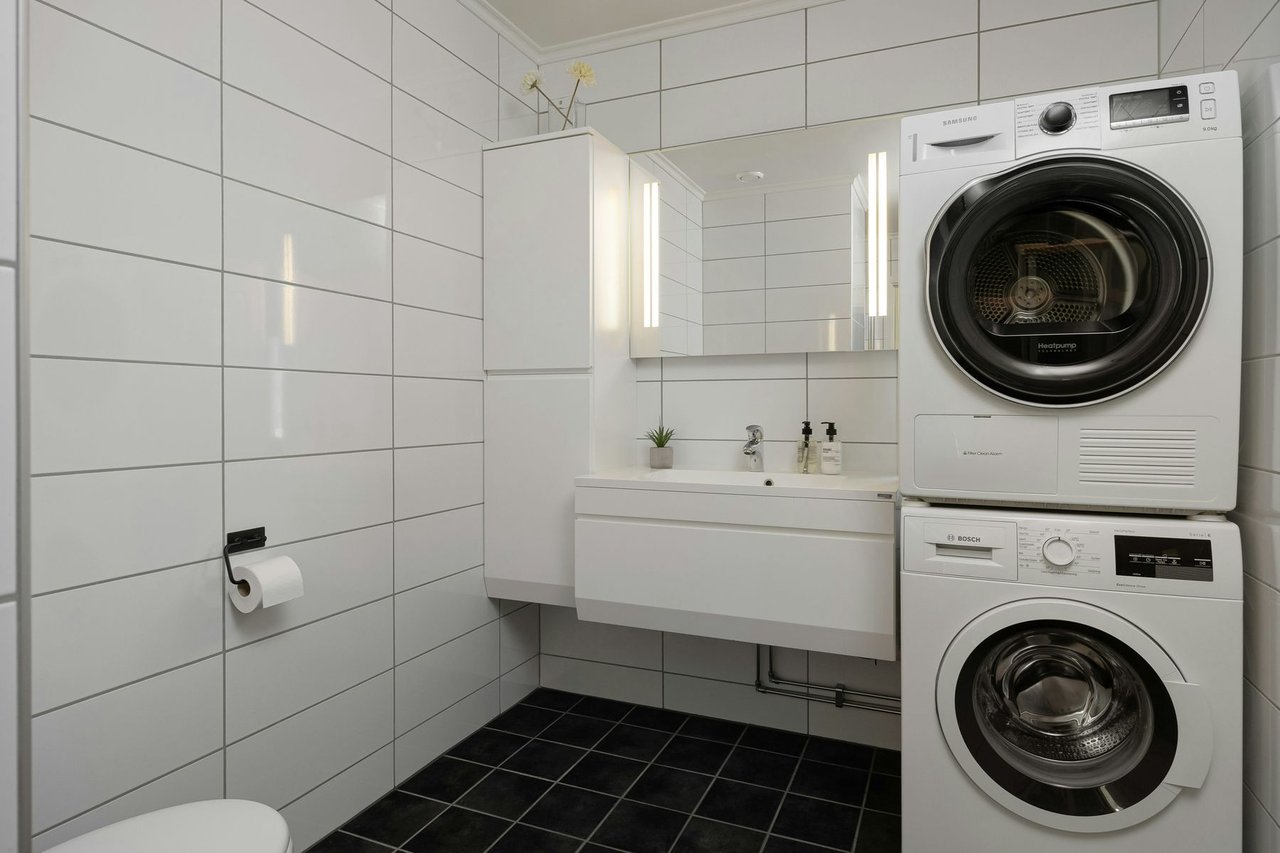
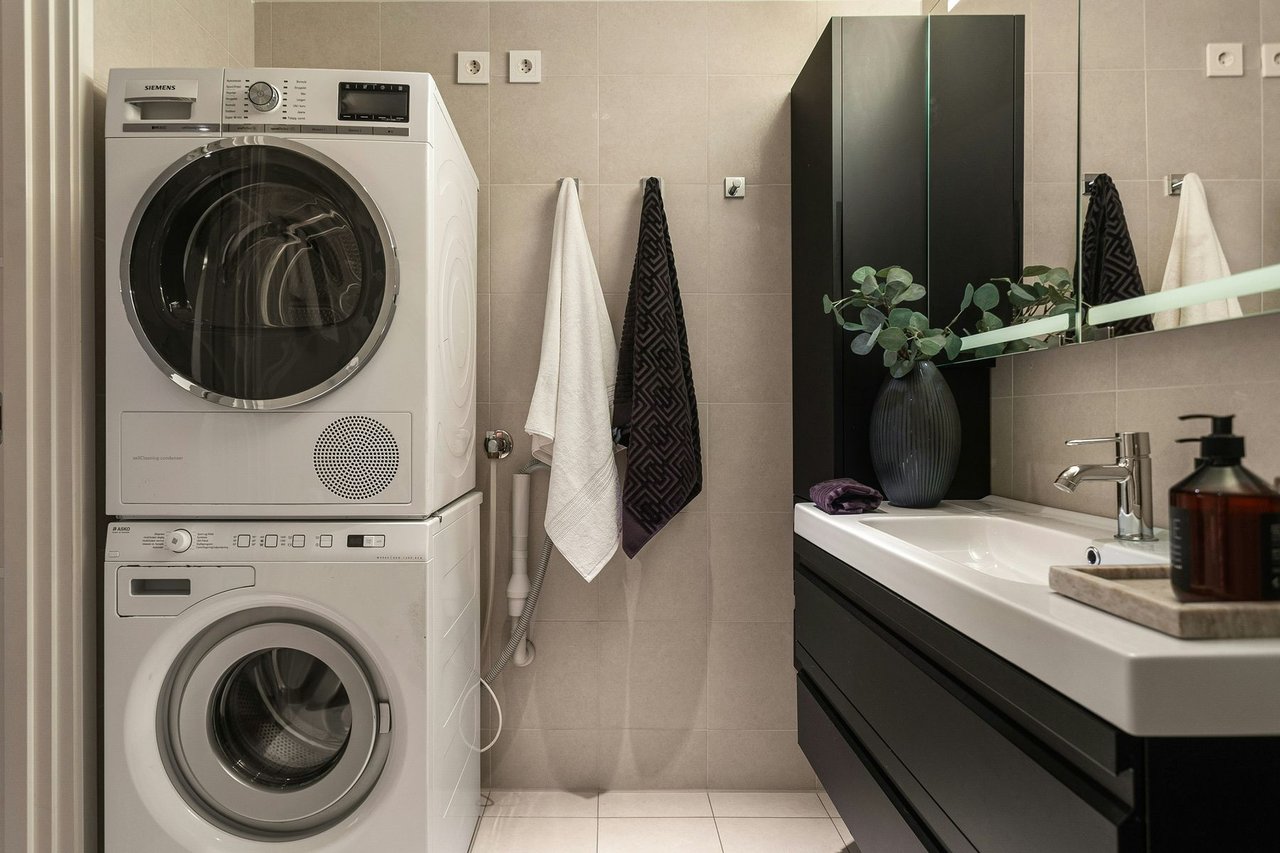
Laundry is usually easiest next to existing plumbing, like a bathroom or kitchen.
Do I need a ventless dryer?
Often, yes.
Adding a new exterior dryer vent can be impractical or prohibited. So many buildings require a ventless condenser or heat-pump dryer. Ask before you fall in love with a particular machine.
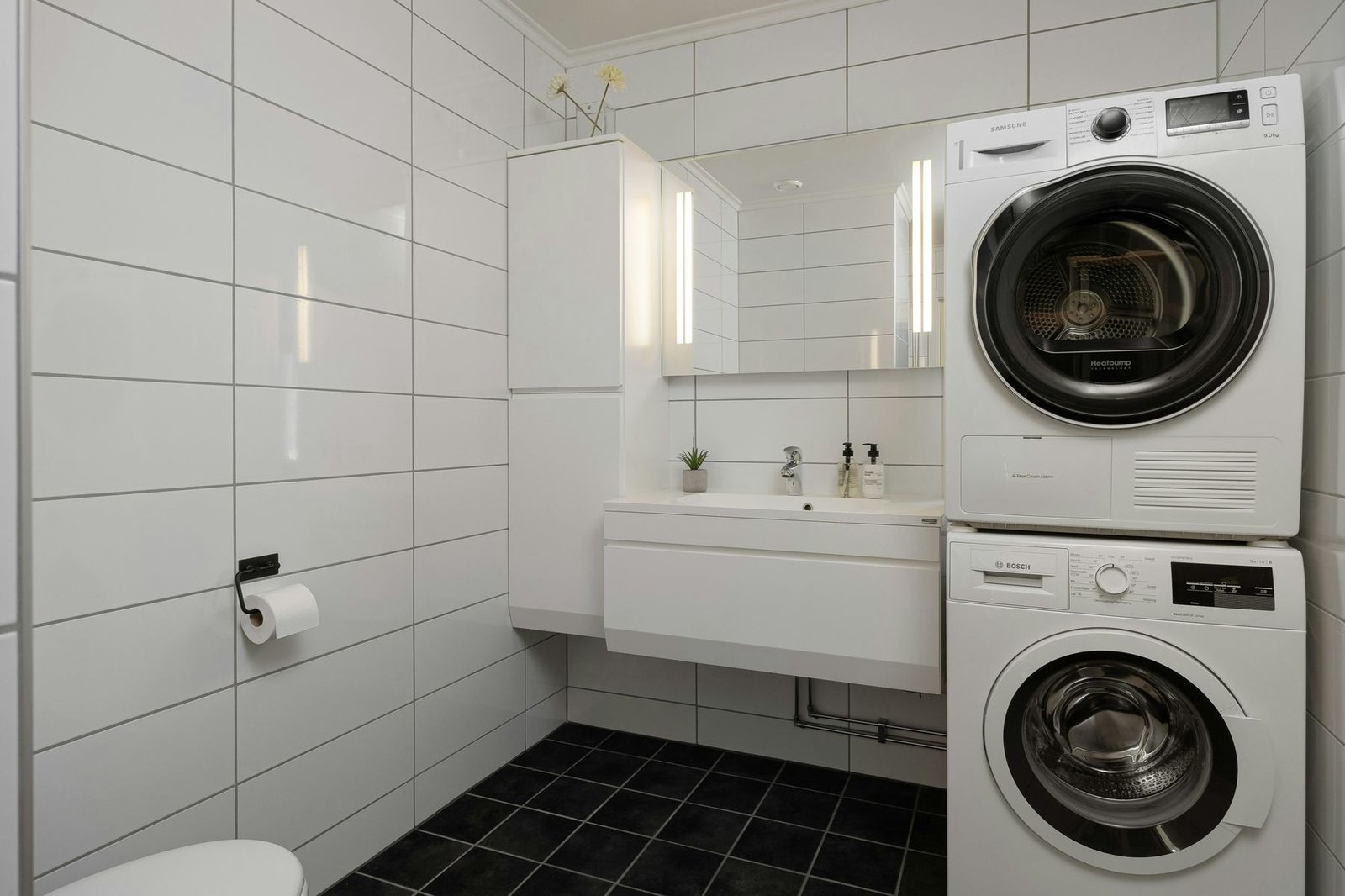
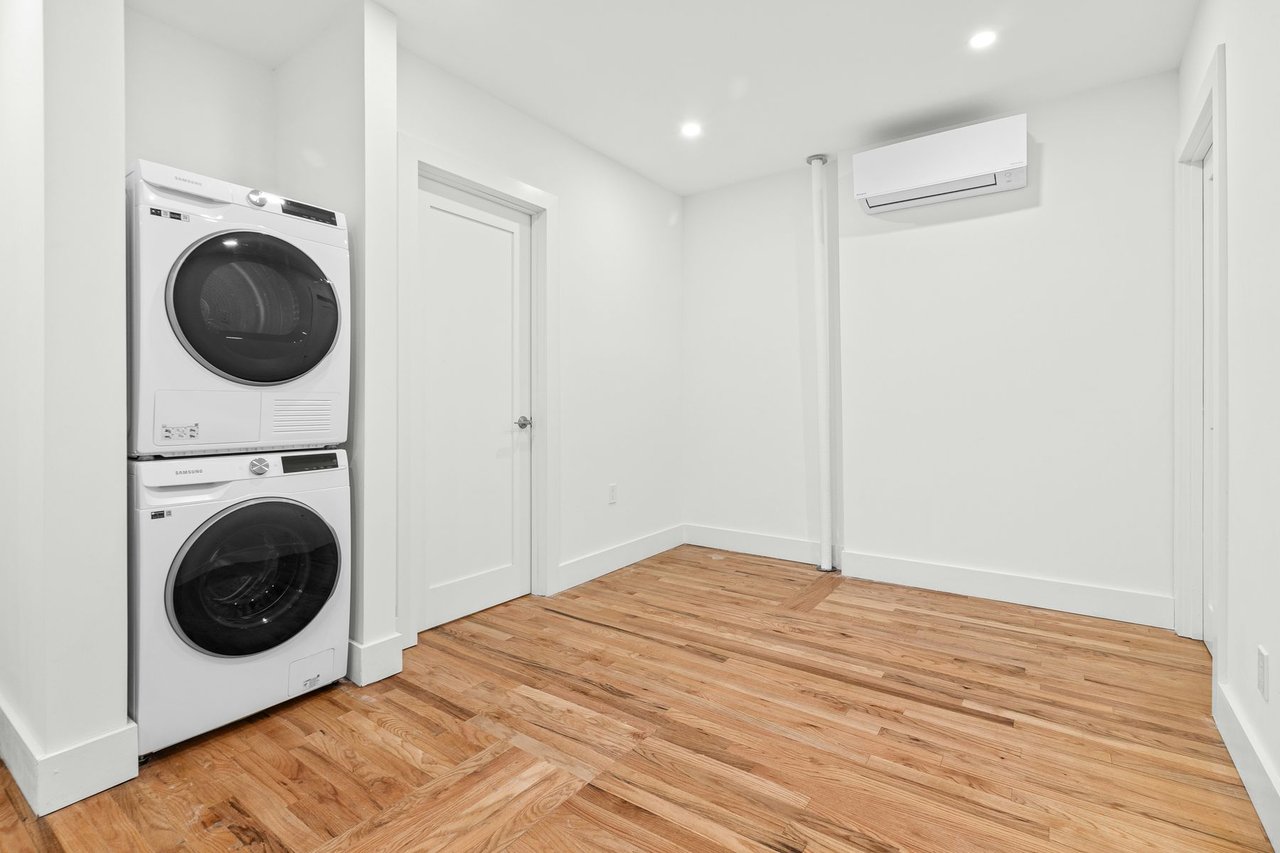
Many buildings require a ventless heat-pump or condenser dryer.
Is it easier to add a washer/dryer in a condo than a co-op?
Not necessarily.
Condo owners often have more say over their unit than co-op shareholders do. But the building's alteration rules still decide what you can install. Either one can limit new washer/dryer installations because of plumbing, drainage, electrical load, waterproofing, or wet-over-dry rules.
So I care less about the label on the listing and more about what that building is approving right now.
Who should be involved before I buy?
Four people, and each one answers a different question.
Your attorney reviews the building documents. Tell them adding laundry is material to your decision.
The managing agent or board confirms current policy, alteration requirements, and whether new installations are being approved.
An architect, contractor, or plumber tells you whether the install is physically realistic in your specific apartment.
A home inspector can flag visible plumbing or electrical issues. But they can't tell you whether the board will approve the alteration.
That last one trips people up. A clean inspection isn't an approval.
What do "has hookups" and "washer/dryer allowed" actually mean?
Not the same thing. Listings use these phrases loosely, so here's how I read them.
"Has a washer/dryer." The machines are there. Confirm they were properly approved.
"Has hookups." The apartment may have supply, drain, and electrical connections. Building approval still matters.
"Building permits washer/dryers." Encouraging. Your individual install can still need approval.
"Might be possible." That means more investigation. Don't rely on it yet.
What should I ask the listing agent?
Six questions. Ask them early.
- Is the building currently approving new in-unit washer/dryer installations?
- Are there apartments in this line or with this layout that have added laundry?
- Can we review the current alteration rules before contract?
- Are there wet-over-dry restrictions?
- Does the building require ventless dryers or specific appliance types?
- Has the seller investigated adding laundry to this apartment before?
What if laundry is a deal breaker?
Say so early.
In Manhattan, I treat washer/dryer feasibility as a pre-contract due-diligence issue. It's not something to solve after closing. Make sure your attorney knows it matters to your decision.
Here's where I land
Don't assume.
That's really the whole thing. "Allowed" isn't "approved." "Has hookups" isn't "can add one." And a closet that works on paper might not work in the wall.
The buyers who get this right are the ones who ask before they're under contract, when they still have every option.
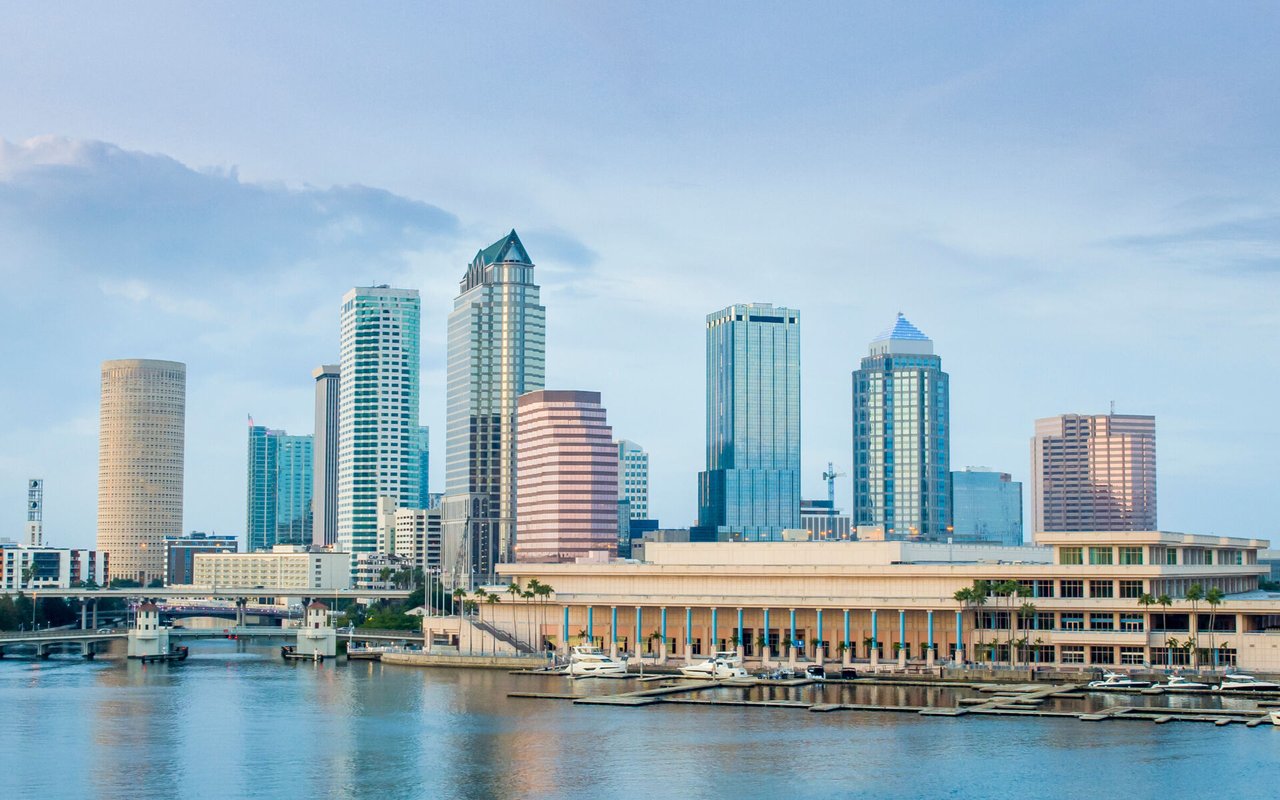
I work in both Manhattan and Tampa, so I hear the same surprise from people moving in either direction. Things that feel standard in one market can be a real project in the other. If you're weighing both, buying and selling in both markets is a good place to start.
Download the Manhattan Washer/Dryer Buyer Checklist (free PDF)
So, is in-unit laundry a must-have for you, or a nice-to-have?
This is general information, not legal advice. Building rules, approval standards, and NYC filing requirements vary by property and scope. Always confirm current requirements with the building, your attorney, and the appropriate licensed professionals.
About Kelly Burchill
Kelly Burchill is a dual-licensed real estate advisor with Compass, a Florida Broker Associate and New York Associate Broker working with buyers and sellers in Manhattan and South Tampa. A former TV news reporter, she brings a research-first approach to real estate, including the building-level due diligence that matters when buying a Manhattan co-op or condo. She specializes in connecting the Tampa and New York markets. Two Markets. One Strategy.
Published September 21, 2026